Why Paella Needs to Rest: The Final Minutes Before Serving
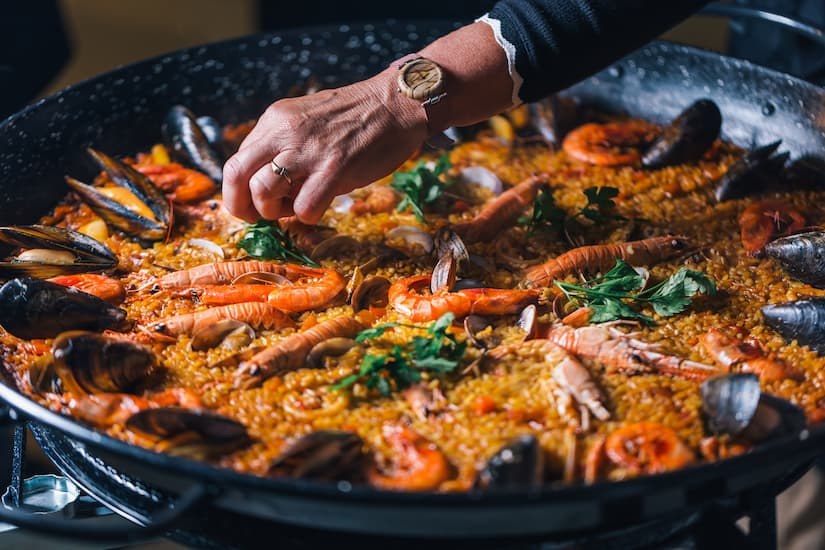
The flame is off. The stock has disappeared, the prawns are pink and everyone is ready to reach for a spoon.
Then the chef does something that can feel almost cruel: covers the paella and asks everyone to wait.
Those minutes are not empty. The rice can absorb remaining moisture while the hot pan completes its work away from the flame.
Barcelona Paella Experience’s published recipes build this pause into seafood, meat-and-vegetable and vegetarian paella. The exact instruction changes slightly, but the principle stays the same: cooking does not end the instant the burner is turned off.
What does “resting” a paella mean?
Resting begins when the pan comes off the heat and ends when the paella is uncovered and served.
The rice is no longer boiling, but the pan remains hot and the cover retains warmth. A small amount of liquid between the grains can be absorbed rather than pooling when served.
Spain’s official tourism website includes the same step in its traditional paella recipe: remove the pan from the heat, allow the rice to stand so the remaining stock is absorbed and serve after five or six minutes.
Resting is not a rescue for undercooked rice or a flooded pan. It is the final adjustment after the rice has already reached the right stage on the heat.
How Barcelona Paella Experience rests each paella
The current Barcelona Paella Experience recipe collection gives three practical versions of the same technique.
Seafood paella
After the rice has cooked and the final high heat has helped form the socarrat, the seafood recipe removes the pan from the flame and places a towel over it for about three minutes.
Meat and vegetable paella
The published method also finishes with a clean towel over the pan for three minutes, allowing the rice to complete its final stage before serving.
Vegetarian and vegan paella
The vegetable version allows a slightly wider range: cover the pan with a towel or aluminium foil for approximately three to five minutes.
Different recipes, pans and amounts of moisture explain why one universal number is less useful than the method for the particular paella.
The rest begins with reading the pan correctly
A good resting stage depends on the decision made immediately before it.
In the vegetarian recipe, the guidance is very clear: when the paella is almost finished, there should be basically no broth left in the pan. The cook tastes the rice near the end and adds only a small amount of hot broth if it genuinely needs more time.
Before turning off the heat, ask:
- Is there visible liquid moving between the grains?
- Does the rice still have a hard, chalky center?
- Is the bottom beginning to catch more strongly than intended?
If the rice is hard and dry, covering it creates no new liquid. If the pan is very wet, a short pause cannot replace evaporation on the burner.
The rest works best when the paella is already nearly ready.
Why a towel—and when foil appears in the recipe
A clean towel creates a light cover. BPE’s seafood and meat recipes specify a towel; the vegetable recipe allows a towel or foil.
Move the pan fully away from the flame. Keep fabric clear of burners and hot controls, using a clean, dry towel that does not hang into danger.
Do not reach automatically for a heavy fitted lid. A paella pan is broad and shallow, and the published method calls for a temporary cover—not a return to enclosed simmering.
Three minutes or five?
There is no single number that fits every paella.
Barcelona Paella Experience’s seafood and meat recipes use about three minutes. Its vegetable recipe uses three to five. Spain’s official tourism recipe for Valencian paella recommends five or six minutes.
Pan size, rice variety, heat source and remaining moisture all influence the result.
Use the published recipe as your starting point. For the Barcelona seafood method, begin with three minutes. When you uncover the pan, check the grain and moisture before adjusting next time.
Common mistakes during the final pause
Serving the moment the heat goes off
The rice loses the short finishing period built into the method.
Covering the pan while it is still on the flame
That is continued cooking, not resting, and it is unsafe with a towel.
Expecting the rest to fix raw rice
Residual heat cannot correct badly undercooked rice with no moisture left.
Leaving the paella covered indefinitely
Set a timer so the paella reaches the table hot and at the intended texture.
A simple home checklist
Before serving your next paella:
- Taste the rice near the end of the cooking time.
- Check that the visible stock has reduced appropriately.
- Complete the final heat stage required by your recipe.
- Remove the pan fully from the burner.
- Cover it using the method and time in the recipe.
- Uncover, check the texture and serve from the pan.
Write down what you notice; it is more useful for the next attempt than memory alone.
Frequently asked questions
Must every paella rest?
The seafood, meat-and-vegetable and vegetarian recipes currently published by Barcelona Paella Experience all include a resting stage. Follow the method for the particular paella you are cooking.
Should I rest paella with a lid?
The Barcelona Paella Experience methods specify a clean towel, with towel or aluminium foil offered for the vegetable version. They do not instruct cooks to use a fitted lid.
Can resting create socarrat?
No. In the published recipes, socarrat is encouraged with a final increase in heat before the pan is removed. Resting follows that stage.
What if my rice is still hard?
Taste before removing the pan. The vegetable recipe advises adding a few tablespoons of hot broth if the rice needs another minute or two. Resting alone should not be expected to repair seriously undercooked rice.
Can I serve directly from the paella pan?
Yes. Spain’s official tourism recipe recommends presenting the paella in the same pan after it has rested. Place the hot pan on a safe, heat-resistant surface.
Learn to recognize the moment, not only the minute
The final pause is simple, but it brings together everything that happened before it: the amount of stock, the strength of the flame, the rice variety and the cook’s decision about when to stop.
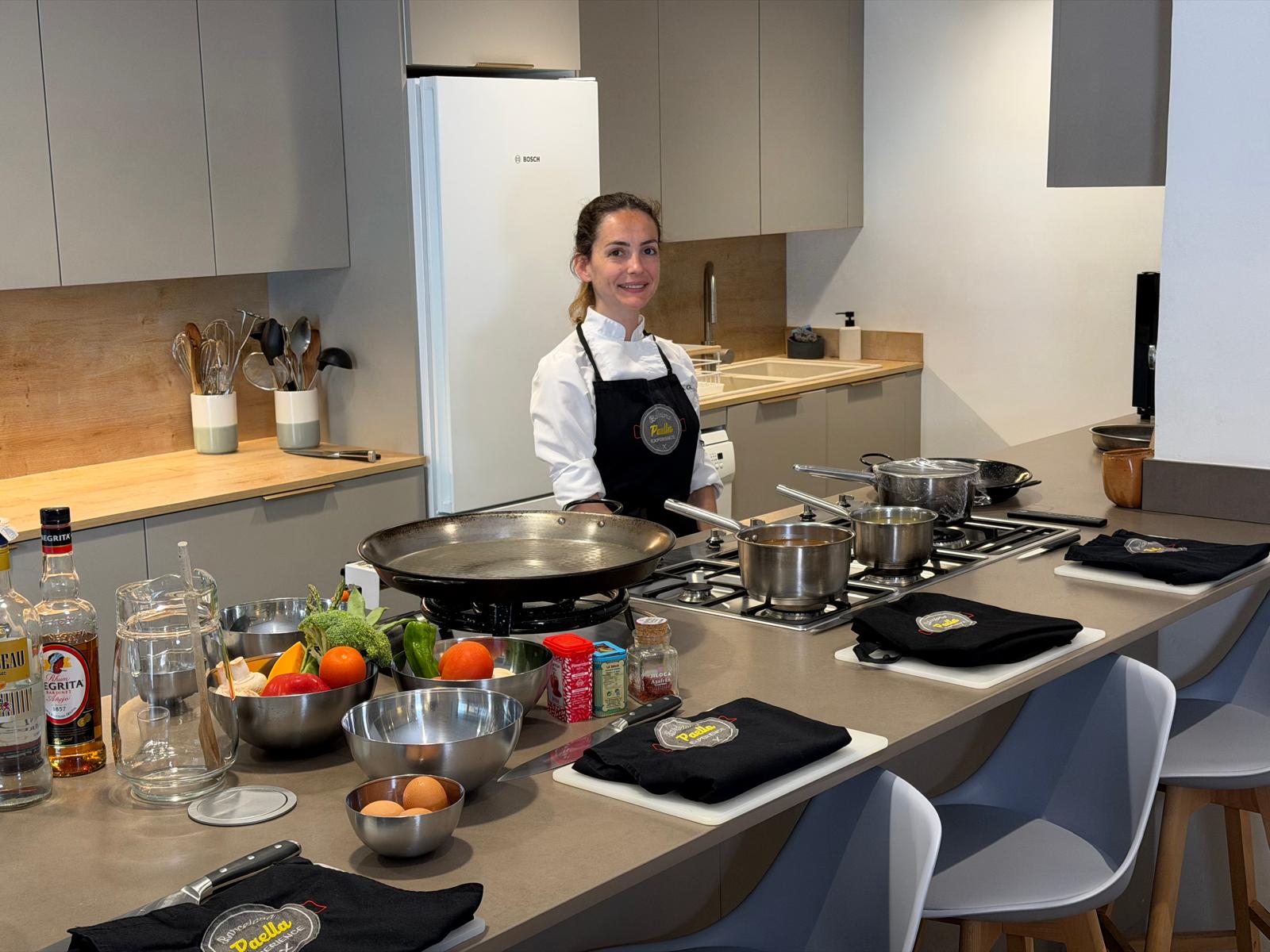
A recipe gives you a starting time. A chef beside the pan helps you see why it works.
In a hands-on private paella class in Barcelona, your group prepares the dish from the first ingredients to the final spoonful while learning how heat, stock and timing shape the result. Explore the available class or check current availability when you are ready to cook your own pan.