Cooking classes in barcelona: the complete guide
Learning to cook in Barcelona isn’t about following a recipe to the letter. It’s about sinking your hands into a dough with history, smelling a sofrito that reminds someone of their grandma, tasting a wine that rarely leaves the country. It’s about sharing a table with strangers who end up being your toasting buddies.
Cooking classes in Barcelona aren’t just another tourist add-on. They’re a gateway to the city’s heart, where food is the excuse and the experience is the story. Every workshop is a slow-cooked narrative written between virgin olive oil, sharp knives, and accents from around the globe. And yes, you eat. Very well.
What you’ll learn (without realizing it) if you choose wisely
This article isn’t just a list of places where they hand you an apron. It’s a guide to understanding why the best cooking classes in Barcelona have waiting lists. Why people come back. Why a tourist ends up asking if there are any openings as a kitchen assistant.
We’ll talk about:
- The difference between making a paella for Instagram and living a real experience with rice, wooden spoon, and patience.
- The options: from family workshops to private events that look like something from Netflix.
- Why Barcelona Paella is on everyone’s lips and how to book without missing out (spoiler: you can do it right here).
- Tips no travel agency will give you: from how to choose based on your level to what to ask before booking.
What goes on in a barcelona cooking class: the real menu
More than just paella (though paella is sacred)
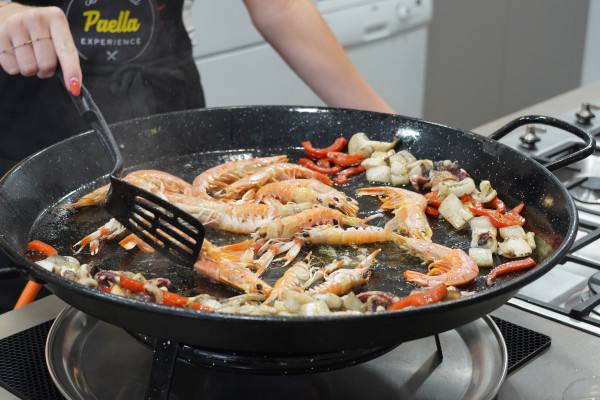
Yes, paella. But not like the one you made at home with basmati rice and chorizo. Here, we start with the basics: a proper sofrito, broth made from scratch, and the sacred art of not stirring the rice.
But there’s more to it:
- Fideuà with real alioli (made with mortar and elbow grease).
- Tapas with first and last names: escalivada, esqueixada, Barceloneta-style bombas.
- Catalan cream, torched with sugar and flair.
- Tomato bread the way it should be.
The market as a starting point
Many workshops begin where every good story should: at the market. La Boqueria, Santa Caterina… Places where chefs are on a first-name basis with vendors, where peppers smell right and fish don’t lie. That’s where you learn to choose, to touch, to ask.
Practice without pressure (but with a sharp knife)
No cooking experience required. Everyone gets a cutting board, an onion, and the space to mess up. The chef sets the rhythm, but the group leads: chopping, frying, flambéing. And in the end, you taste.
Groups, couples, companies: everyone fits in
There are workshops for every kind of traveler:
Private or for couples
Ideal if you’re celebrating something or just prefer not to share your knife. More relaxed kitchens, attentive chefs, better wines.
With kids (drama-free)
Adapted workshops where kids knead, taste, and learn without anyone telling them to hush. Simple recipes, relaxed atmosphere.
Team building without PowerPoints
Companies that have done it all and want something real. Cooking together breaks the ice, sparks laughter, and creates apron photos worth gold. Barcelona Paella nails this.
How to enjoy a cooking class like a local
Decide what you want to experience (and with whom)
A quick tourist class isn’t the same as a slow-paced experience. Define if you want something educational, fun, or emotional. Are you traveling solo, with a partner, or in a group?
Look at the details before booking
- Language: most are in English, but there are options in French, Italian, or Catalan.
- Duration: between two and four hours. Some include a market tour.
- Location: Born, Gòtic, or near the sea. Everything’s close if you take your time.
Book in advance
The best experiences fill up quickly, especially during high season. Don’t wait until the day before. You can check dates and availability here.
The extras: what isn’t cooked but stays with you
Pairing without pretension
Some classes include guided tastings. No need to be a sommelier: just be curious. Wines from Priorat, cavas from Penedès, vermouth on tap.
Healthy cooking with flavor
There are also workshops focused on conscious eating. Vegetarian, gluten-free, plant-based menus… Done right, without preaching.
Souvenirs that won’t weigh down your suitcase
You get the recipe booklet, sure. But also the tricks, the stories, and that moment when your sauce turned out better than the chef’s. That sticks with you.
The questions everyone asks (and the honest answers)
Do I need to know how to cook?
No. If you can open a bottle of wine, you’re qualified. The rest, you’ll learn.
Do we eat what we cook?
Always. With wine. And time.
Are there vegetarian or gluten-free options?
Yes. Just mention it when booking. They adapt with no problem.
Is it a good idea to go with kids?
A very good one. They have fun, try new things, and learn without noticing.
Can I gift a class?
Yes. And you’ll be the hero. Many experiences offer vouchers or gift cards.
End your trip with flavor (and no rush)
The best things can’t be bought. They’re lived. And a cooking class in Barcelona is one of those experiences you won’t forget.
You leave with the feeling of having touched something real. Of having understood a piece of the city through its food. Of having cooked, shared, and laughed. And that, my friend, is way more than just making paella.
Book ahead, choose wisely, and put on that apron. It’s waiting for you.